I was once employed by a homeless shelter in Denver, Colorado. This was after I received my degree too. I was really happy, started to develop peace, support, and respect amongst people who needed the service. Then one morning, I worked graveyards. I was assigned to families, the second floor. Singles was the bottom floor. I was in the office on the 2nd story and I hear this man yelling and shouting about threatening to blow up the building. Protocol says to report that stuff immediately. So I tell my lead co-worker. She comes up with me and confronts him. We are in the office. He yanks my lanyard with my keys, forcing my neck and head in a downward direction. And threatened my life. He said and I quote “You are dead.” I left the property immediately, ruined another position, possibly career because I really started to enjoy that job.
-

-
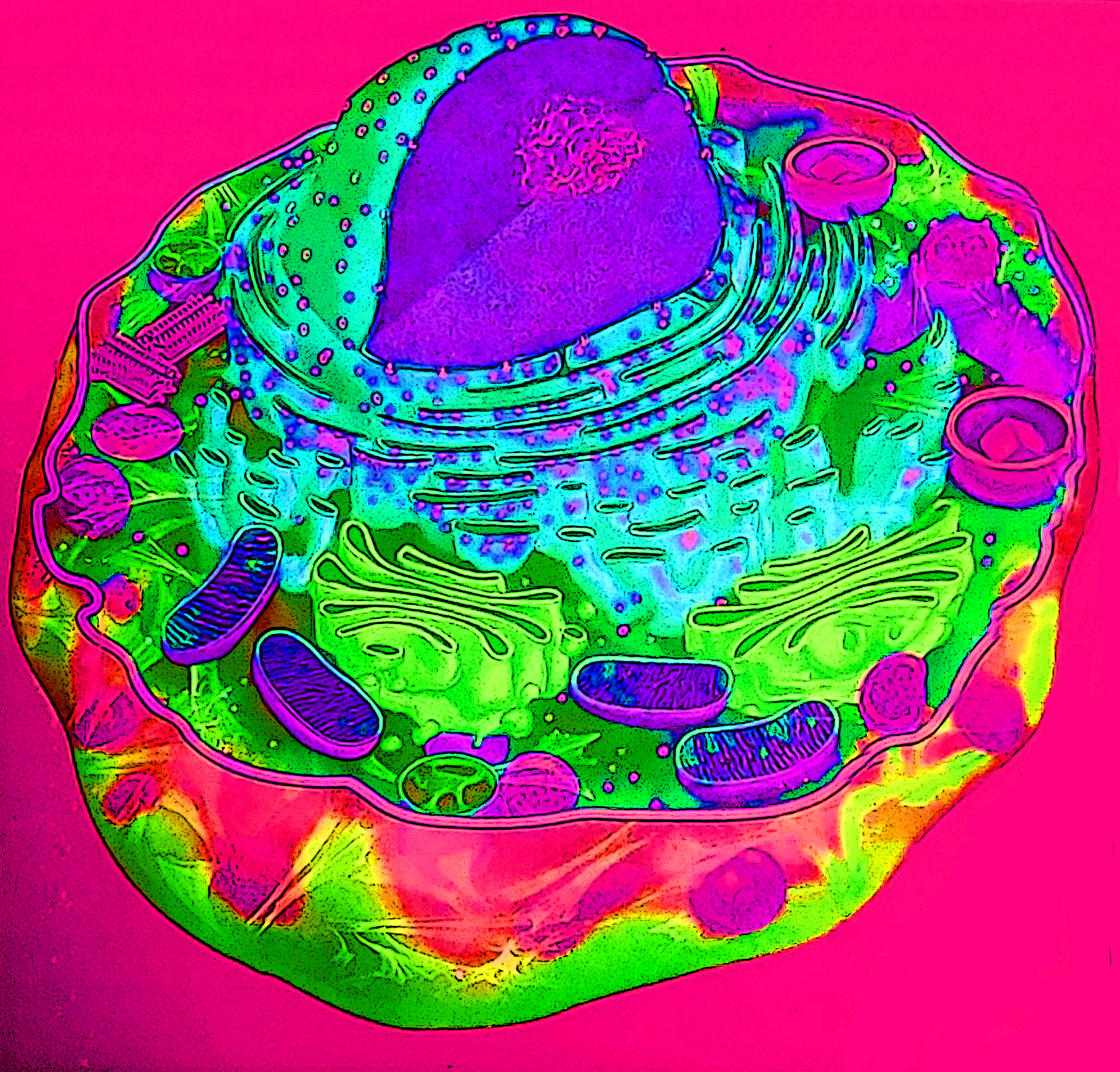
The first idea is to start a research project that its goal is to sequence every gene of every specific cell type in an organism. For instance, humans have approximately 210 specific cell types (e.g. a neuron, a red blood cell, epithelial cells etcetera). The purpose of sequencing every gene in each specific cell type is to understand the specific genes that the cell type expresses to create its differentiation. On top of understanding all the specific genes that each cell type expresses, we can gain an understanding of all the proteins and isoforms that each gene is responsible for, and the entire biochemical activity (e.g. signal transduction cascades) the proteins are involved in to create the specific function of that specific cell type in the overall system of the organism. Therefore, ultimately creating a map of all the genes every specific cell type expresses.
For instance, take a neuron, a muscle cell, an epithelial cell and map out all the specific genes that each cell type expresses. By doing this, we will not only understand the genes that each cell type expresses, but also the genes that each cell type does not express. Then we can color code the map to understand specific genes that the neuron, muscle cell, and epithelial cell share in terms of expression. For example, one color would indicate exactly that; it would indicate the genes that the neuron, muscle cell, and epithelial cell shared. Also, to obtain more detail, the genes that the neuron and muscle cell shared in terms of expression would be a different color than the genes that the epithelial cell and neuron shared and so forth. Furthermore, specific genes expressed only by the specific cell type would be indicated by a unique color and genes that are not expressed by the specific cell type by another color. Now apply this to a map not just of 3 cell types, but every cell type in the organism. This is an understanding of histology on a molecular genetics level.
Another idea which can take this research further is to look at all organisms in terms of how many specific cell types they are composed of and see if there is a correlation between the number of specific cell types and complexity of organisms in terms of evolution, which is mapped out by the tree of life (the enormous phylogenetic tree). For example, all bacteria, archaea, unicellular protists are composed of one cell. Then take the measurement of how many specific cell types each multicellular organism is composed of such as multicellular protists, plants, fungi, and animals would be established. For instance, a multicellular protist having as little as 2 cell types, plants having 3 basic cell types (Parenchyma, Sclerenchyma, Collenchyma, in which the combination of these 3 types create complex tissues), a mushroom having approximately 15 specific cell types, invertebrates typically having less cell types than vertebrates, such as a spider maybe having 50 cell types, a bird possibly having 120 cell types, a gorilla having 200 specific cell types, and a human having approximately 210 specific cell types. And ultimately, see if there is in fact a correlation between numbers of specific cell types and evolutionary complexity between organisms, which to me, there seems to be.
Another study to further the research of evolutionary complexity between organisms based upon their specific cell type composition is to sequence entire genomes of every organism and calculate the number of genes each species has to see if there is a correlation between the number of genes in the genome and evolutionary complexity. However, there may be an organism that seems more complex such as having more genes in their genome than another organism that has fewer genes in its genome. The key is to look at how many genes are being differentially expressed to create specific cell types. So even though this organism has more genes, there are less combinations of those genes being expressed, thus less specific cell types, thus less complex than the organism that has less genes in its genome. This is so, because the organism that has less genes in its genome has more combinations of genes being expressed than the organism with more genes in its genome, thus more specific cell types, which creates higher complexity. So keep in mind that the number of genes differentially expressed or number of combinations of genes expressed, which creates cell types, is more significant in terms of evolutionary complexity than simply the actual number of genes in the genome or just the actual number of genes expressed in the genome. Yet, there still may be a general trend of the number of genes in the genome being higher in more complex organisms and less in simpler organisms, because on a mathematical note, the more genes an organism has in its genome, the more possible combinations of genes being differentially expressed to create more specific cell types are available.
Evidence that also indicates the level of evolutionary complexity for an organism is the number of germ layers. The known germ layers in contemporary biology are ectoderm, mesoderm, and endoderm. Today on earth, some organisms only have 2 germ layers, while other organisms have 3 germ layers. Nature made this evolutionary step from 2 to 3 germ layers. Therefore, it is possible in the future that nature will create an organism(s) with 4 or 5 germ layers through evolution.
To further an understanding of evolutionary complexity and germ layers, the correlation between germ layers and specific cell types must be established. In the study of developmental biology, one would come to understand that an organism with 2 germ layers is not capable of having more specific cell types than an organism with 3 germ layers. The organism with 3 germ layers develops more complex tissues, organs, and organ systems through the process of cell differentiation. This is a result of increased differential gene expression to create more cell types. The organism with 3 germ layers has the capability of increased specificity. In other words, there is more specific function to cells as a result of increased differentiation. This also results in higher complexity of biochemical activity through signal transduction cascades, proteins, and etcetera. It is my prediction and future conclusion that organisms with 3 germ layers will typically have more genes in its genome, more combinations of genes expressed, and more specific cell types, which all creates higher complexity than organisms with only 2 germs layers. I think this will also be true in the evolutionary future of organisms with 4 or even 5 germ layers when compared to organisms with 3 germ layers. This will also create higher specificity of cell function in organisms with 4 or 5 germ layers than organisms with 3.
*Note: Project is initially incorporating histology on a molecular genetics level, then moving unto evolution in the perspective of histology and genetics. Developmental biology is also incorporated. To me, this project is sort of a mixture of the human genome project and the tree of life research project into one big biological study to understand the nature of life as a whole system.
Does the level or amount of biochemical activity within an organism correspond with the amount of specific cell types? Because with more specific cell types in an organism, the more differential gene expression (generally just more genes expressed), thus more proteins are produced, which are involved in biochemical reactions. For example, does a fungus have less biochemical activity than a vertebrate animal, but more than a single celled prokaryote?
-
Let the midnight special shine a light on me.
-
Knowledge with the use of linguistics or languages like mathematics and physics can only measure to a certain point then crumbles. Creation is forever. The opposite of creation does not exist. Infinite Questions are pure insanity and chaos. Death, decay, and entropy at its finest. We as humans are not God, nor ever will understand him in his pure, holiness.
-

Why is indigo, a blue-violet, a tertiary, listed in the visible spectrum? One can understand the primaries; red, blue, and yellow, and the secondaries; orange, green, and violet being listed into the visible spectrum, but not just one tertiary. If we are to going to list indigo, a tertiary, then we must list and give names to all the tertiaries in the visible spectrum.
We must list red-orange, orange-red, orange-yellow, yellow-orange, red-yellow, yellow-red, yellow-green, green-yellow, green-blue, blue-green, violet-green, green-violet, red-violet, violet-red, violet-blue, and blue-violet, which is already incorporated, and must include all the rest of the tertiaries in the visible spectrum.
Then explain how red-orange will have a longer wavelength than orange-red because red is more dominant in red-orange than orange-red. This is based on red having a longer wavelength than orange. And red has a longer wavelength than red-orange. Green-blue has a longer wavelength than blue-green because green is more dominant in green-blue than in blue-green.
This is based on green having a longer wavelength than blue. Explain how yellow-green has a shorter wavelength than orange-yellow, because orange has a longer wavelength than yellow and green. Explain how violet-blue has a shorter wavelength than blue-violet because violet is more dominant in violet-blue than in blue-violet. This is based on violet having a shorter wavelength than blue.
Therefore, we should have the electromagnetic spectrum explain all these combinations of tertiary colors and their relation of shorter and longer wavelengths to each other and of course still include the primary and secondary colors and their wavelength relations to each other. Then also include all the shades and tints of all the primary, secondary, and tertiary colors and all their wavelength relations to each other.
Then include the neutrals, black and white, and their wavelength measurements in relation to each other and all the primary, secondary, and tertiary colors, shades, and tints. In general, try to relate every color and every color combination in existence, including the neutrals, and every single wavelength measurement relation to one another.
This would be a true representation of wavelength relations between the entire visible light spectrum, which is between ultraviolet and infrared; and simply, just a more accurate representation of the visible light spectrum in general.
-
Why does human society categorize human beings in many different aspects? For example, humans categorize people into topics such as Jewish, Muslims, White, Black, Hispanic, German, Asian, Native American, and etcetera. Categorizing people as Jewish, Muslim, Agnostic, Atheist, Pagan, Buddhist, or Christian, and etcetera is in a theological or religious perspective. Categorizing people as white, black, brown, yellow, green, purple, and etcetera is in a “racial” or more specifically just by the visible light reflected by one’s skin. Categorizing people as Hispanic, German, Asian, American, Nigerian, South African, Indian, Japanese, Lithuanian, Peruvian, Canadian, Australian, and etcetera is in a political, governmental, or historical perspective. All of these categories are fabricated, inexistent, arbitrary concepts that we use for our current contemporary organization of human civilization, but does not actually exist in tangible nature. What does really exist in nature is deoxyribonucleic acid and our species. Another tangible distinction between people that actually exists in nature is blood type based upon antigens or proteins. There is only one human race, and as long as any one female can mate with any one male there is only one biological species amongst us. Furthermore, what does actually exist as well is the definition of a species and the philosophical or scientific debate on what defines a species. We have it all mixed up when we are referring to someone’s classification. All of these categorizations are flawed. If human society is going to distinguish different types of people other than what we are all a part of, the human species; categorize people on a scientific note based upon nature, like blood types. At least in this context it has some biological function or purpose to do so.
On the contrary, theological, racial, and political categorizations have no function other than to cause discrimination and violence. Okay, give them more credit than that, they for now, keep some sort of social organization to try and maintain some type of peace or order because of our current primordial state. However soon, we will realize they are no longer needed for peace or order of our society, because we will realize they are not real and we will base peace of our unified, free society on the fact that we are all one species with a common goal. These categorizations will become obsolete.
-

The infinite enigma is all of creation, all of existence, or all of nature, including life. The infinite enigma is our attempt to learn or gain knowledge and understand all of creation. All of creation, existence, and nature are the infinite enigma. Creation is a forever puzzle, a puzzle that
is never ending, in which we are trying to unlock. -

Quality repair paves the way. Whether it’s a relationship with any human being or person or doing your laundry, to sewing, drinking water not sugar, to taking care of your teeth or A1C. It’s up to you.
-

Scientific pantheism is a non-denominational core belief system which grounds itself in the scientific methodologies, incorporating measurements to pin-point accuracy to conclude actual facts about the reality we live in and promotes humanitarianism and a healthy Earth. Also, not only does it welcome scrutiny, it encourages it.
-
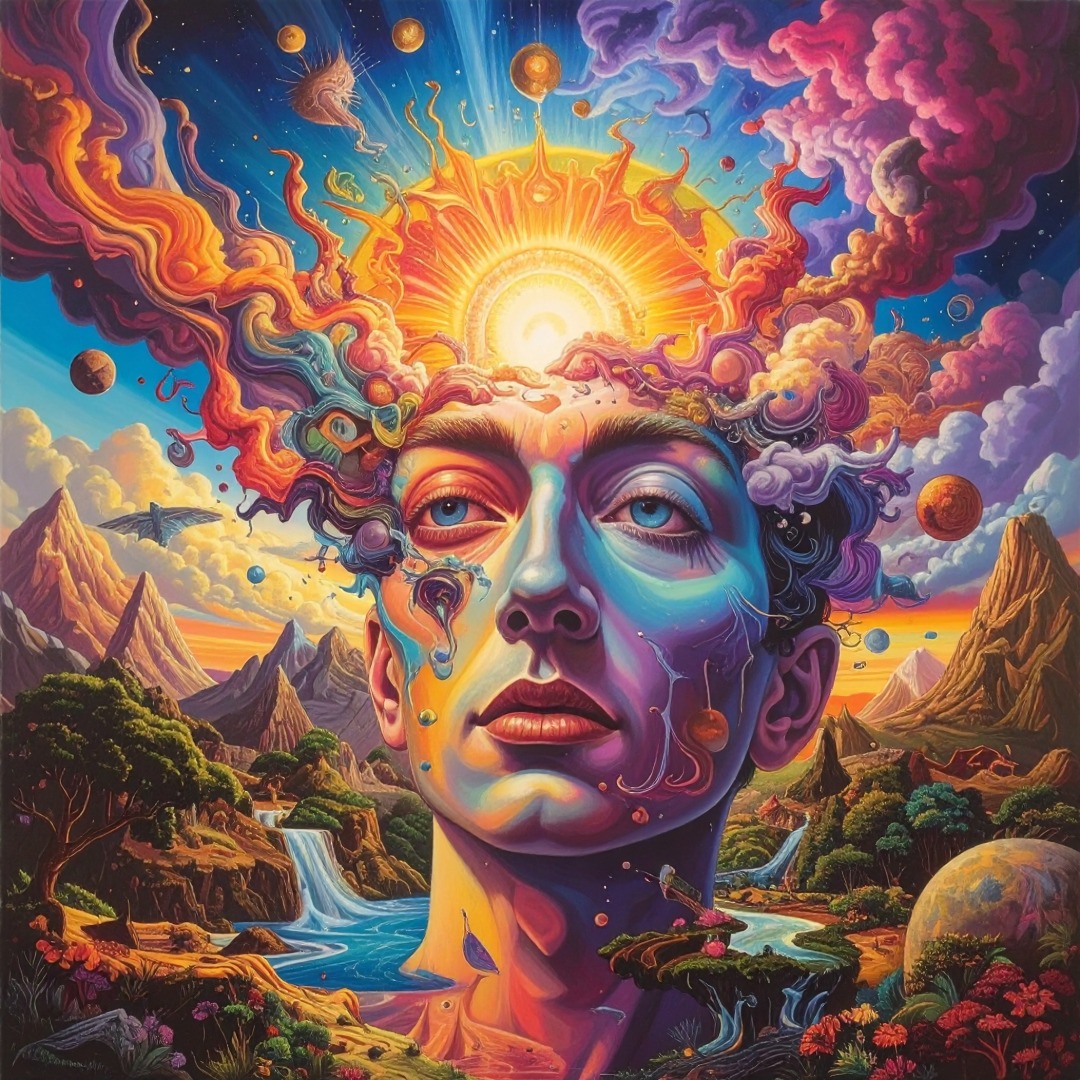
The entire realm of creation encompasses every single baryonic particle, to multiverses, parallel universes, dimensions, energy, all entities, good, evil, love, hate. It encompasses everything that has been, is or will ever be.